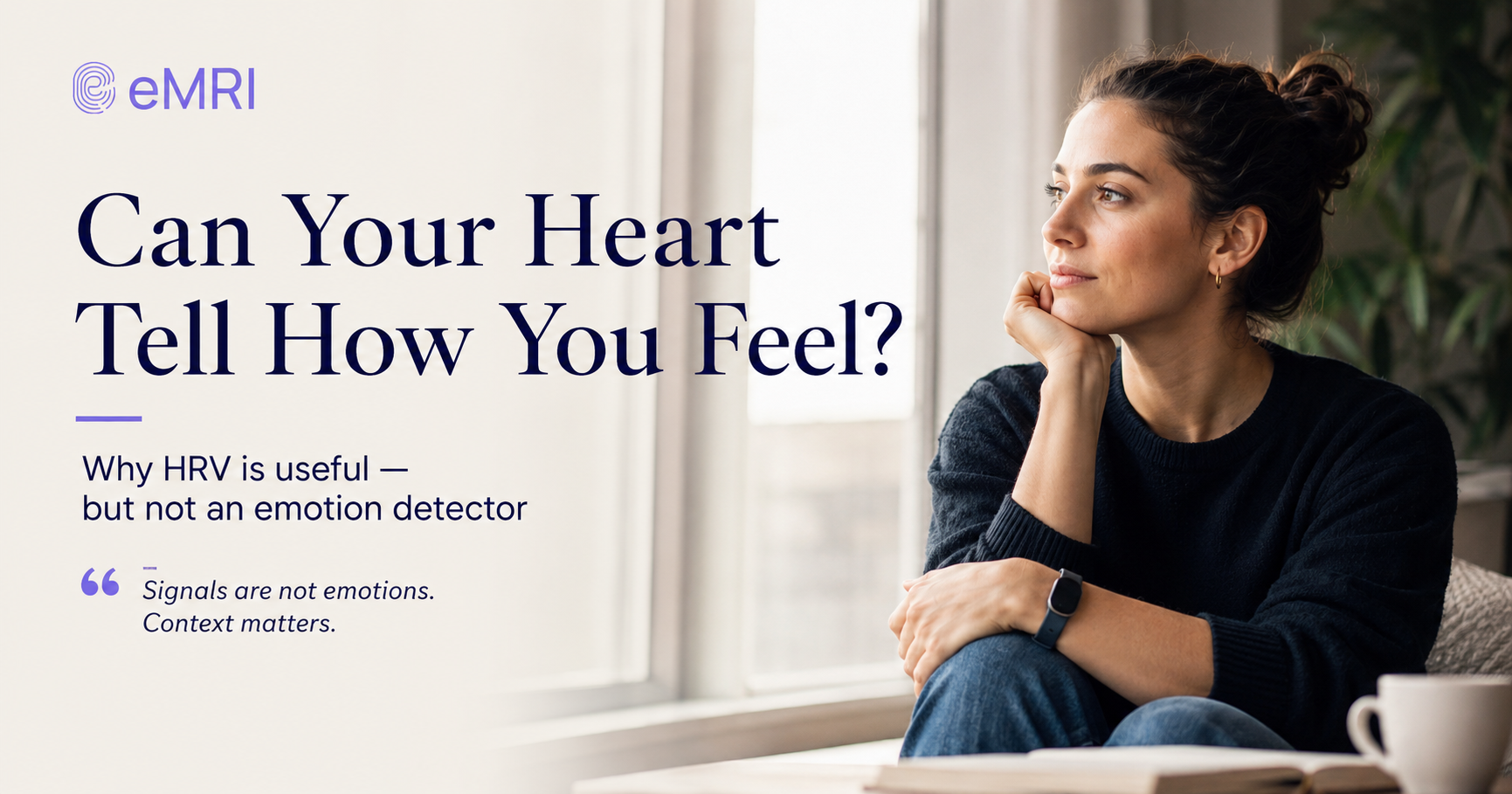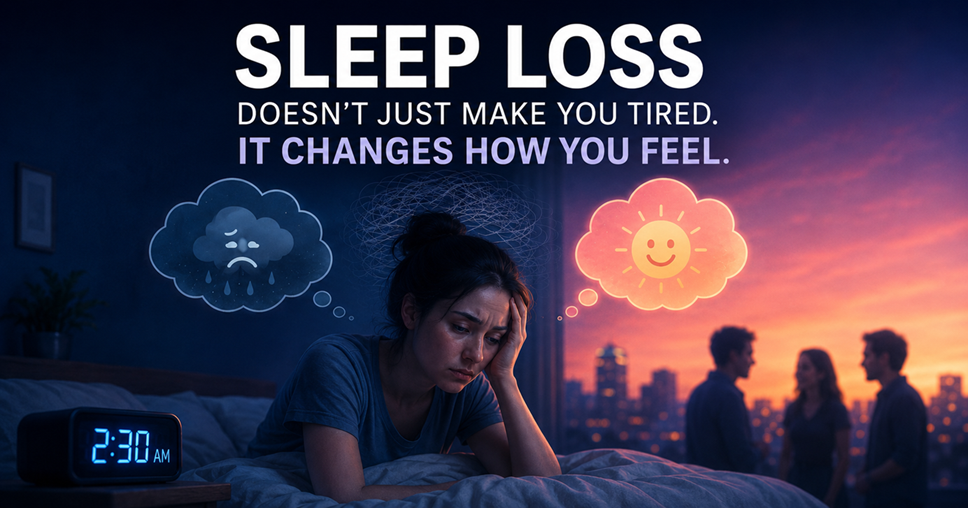
Emotion Map
See how your moods shift with stress, energy, activity, and events throughout the day.
- Review mood changes across the day
- Explore factors connected to your moods
- Get closer to your own emotional rhythm
eMRI connects body signals like HRV, sleep, and movement with quick check-ins throughout your day. Over time, it helps you notice the personal patterns that drain, steady, or support you.
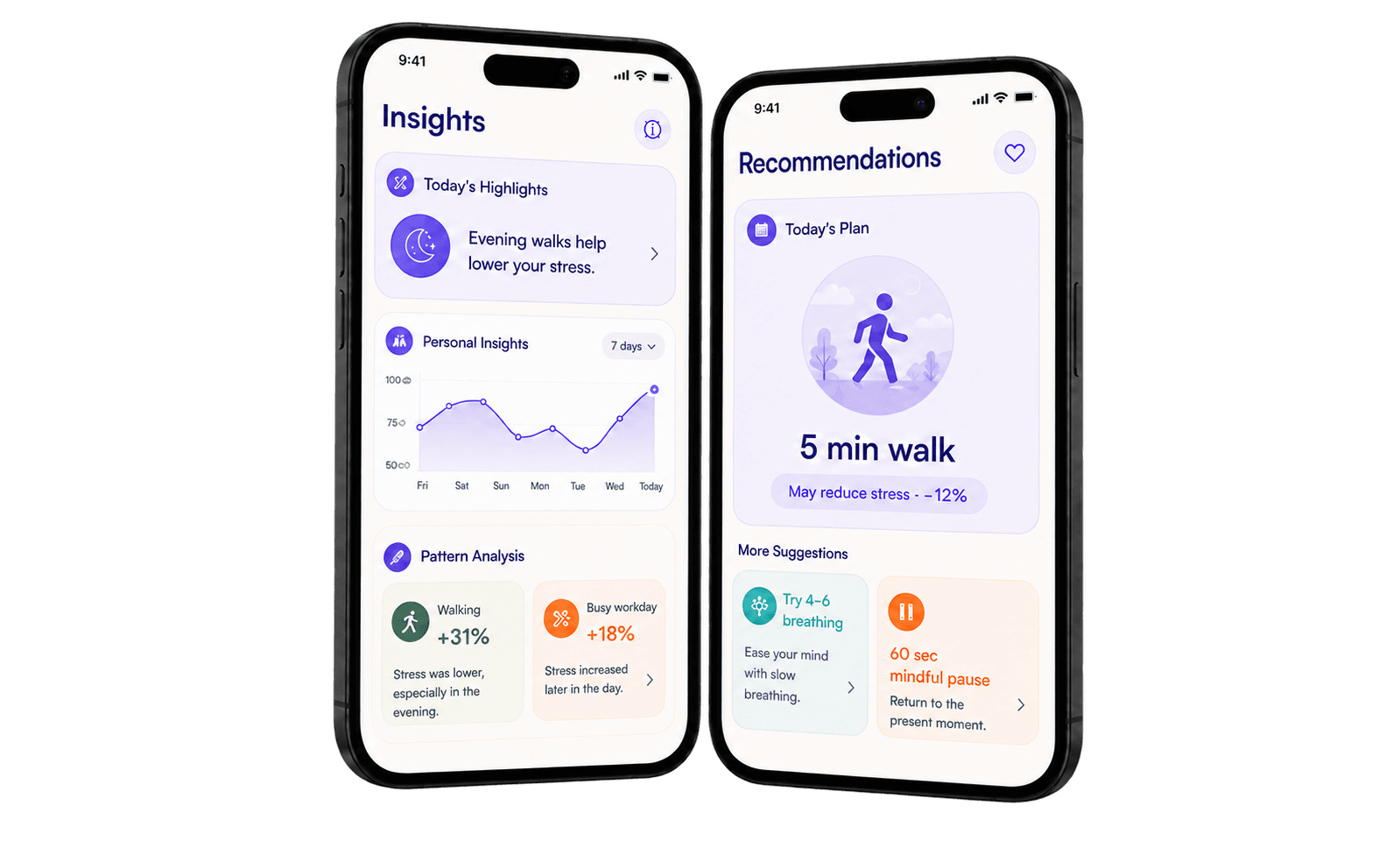
HRV
48 ms
Evening walk
18% lower stress
WHY EMOTIONAL MRI
Tracking how you feel matters. The real progress comes from noticing when a mood appears, what was happening around it, and which body signals showed up with it.
Use quick check-ins that fit into the day instead of long forms.
Review sleep, movement, and heart rhythm data alongside the mood and context you reported.
Notice what tends to drain you, what steadies you, and which habits support you over time.
You decide which data can be used. You can change or remove permissions at any time.
You do not need to sort through complex analytics. Complete short check-ins, and eMRI makes recurring relationships easier to see over time.
With your permission, HRV, sleep, heart rate, and activity data are read through Apple Health or Health Connect.
About 60-second check-ins capture your mood, energy, body tension, and the context around you.
Once enough data builds up, eMRI shows recurring relationships between your body signals and day-to-day experience.
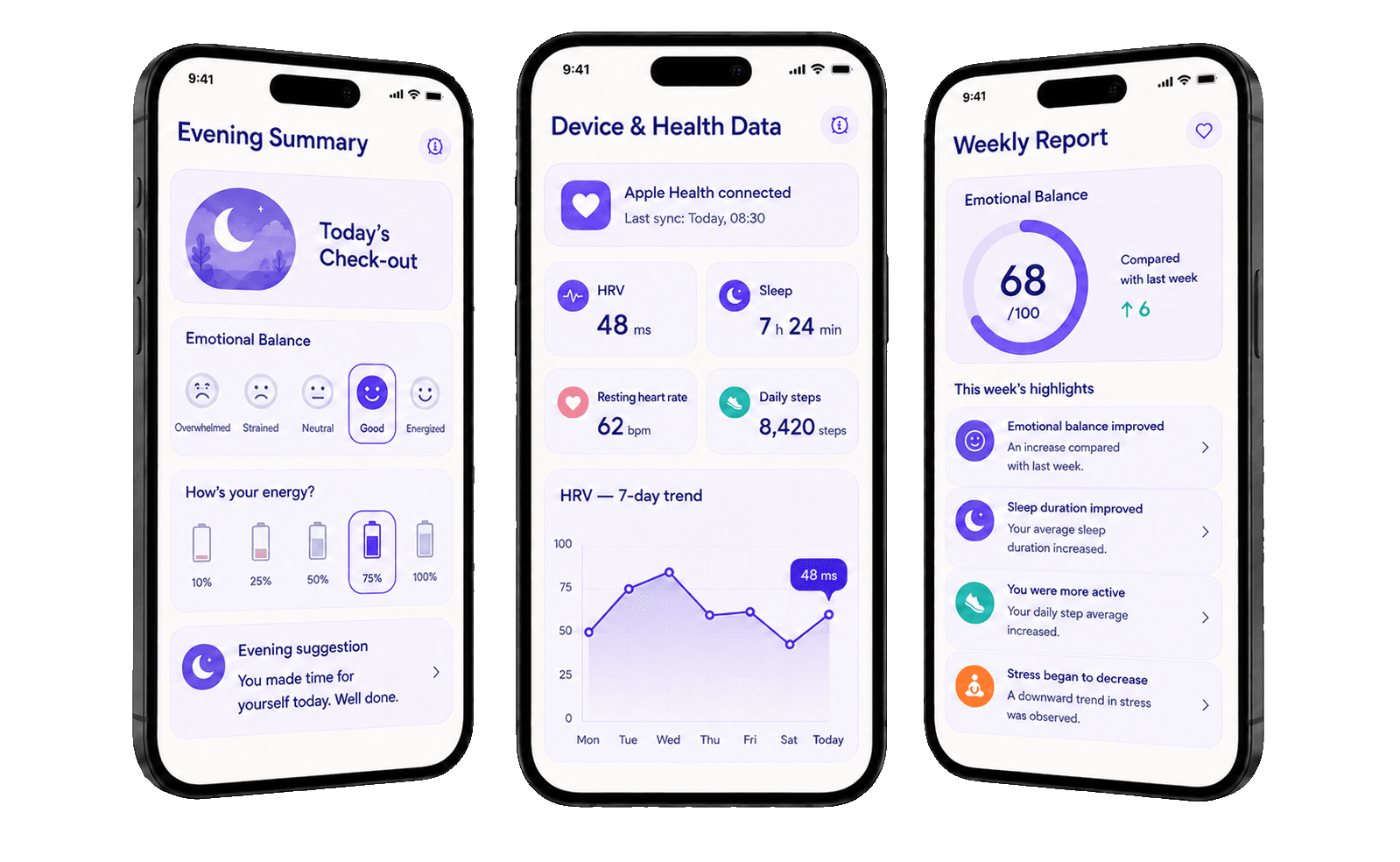
Daily Experience
eMRI does not leave small signals scattered across the day. It brings morning data, daily experience, and evening reflection into one view.
Morning
Sleep, HRV, and other relevant body signals are synced.
During the day
Short check-ins capture your mood, energy, and context.
Evening
The most meaningful shifts from the day are shown in a simple summary.
Weekly
See recurring trends, situations that support you, and changes you may want to watch.
Product Features
See how your moods shift with stress, energy, activity, and events throughout the day.
Move beyond generic advice with explanations based on your own check-ins and recurring relationships.
Choose a short, practical next step that fits the state you are in.
Instead of interpreting every data point yourself, review the most important changes in a clear summary.
Blog
Scientific Approach
eMRI draws on psychology, behavioral science, ecological momentary assessment, and digital phenotyping. Instead of asking you to remember your experience weeks later, ecological momentary assessment captures it closer to real life and real time.
eMRI results are for information and personal awareness. They are not a psychological or medical diagnosis.
Data and Privacy
Mood and health data are sensitive. Privacy is not an add-on; it is one of the core design principles of the eMRI experience.
eMRI only accesses data areas you explicitly allow.
The goal is to avoid collecting data that is not needed for the service.
You can see why data is used and which data types an insight is based on.
Encryption, authorization, and access controls are used to help protect your data.
You can withdraw permissions, export your data, and request account deletion.
No. eMRI does not diagnose psychological or medical conditions and does not replace therapy, medical evaluation, or professional treatment. It is a personal awareness tool that helps you notice patterns in daily life.
Most check-ins take about 60 seconds. They focus on your current mood, energy level, body tension, and context.
Depending on your permissions, eMRI may use mood check-ins, sleep, movement, activity, heart rate, and heart rate variability. You decide which data areas can be accessed.
eMRI reads only the health and activity data you allow through Apple Health or Android Health Connect. These signals are considered alongside your check-ins to help identify personal tendencies.
No. You can use eMRI with short mood check-ins only. Connecting a compatible smartwatch or health app adds body signals to the picture.
You may see some daily summaries from the beginning. More reliable personal patterns require regular use and enough check-ins over time.
Notifications may be sent for short check-ins and evening summaries. You can adjust notification type, timing, and frequency in the app settings.
eMRI is built around explicit permissions, data minimization, encryption, and access controls. How data is used is explained clearly in the privacy documents.
Yes. You can stop using the app and request account deletion at any time. You can also remove Apple Health or Health Connect permissions from your device settings.
Join the eMRI early access list. Get invited to early user testing, hear about new features, and help shape the product with your feedback.
We will only contact you about eMRI early access and important product updates.
Leave a message for early access, partnerships, or product questions. We will reply by email.
hello@emotionalmri.com